



Vierdaagsefeesten 2027 – Nijmegen, Netherlands
Overview
Vierdaagsefeesten is the largest freely accessible event in the Netherlands and one of the largest events in Europe. Held simultaneously with the International Four Days Marches, the world’s biggest multi-day walking event, the festival transforms the entire city centre of Nijmegen, the oldest city in the Netherlands, into a vibrant celebration of music, culture and community.
Spread over seven days, the festival attracts over one and a half million visits to the inner city. The program offers more than 1,000 performances divided over as many as 40 different stages. There is something for everyone, whether you love pop, classical, rock, techno, jazz, hip-hop, dance or folk. From intimate singer-songwriter sets in historic courtyards to massive dance stages under the Waal Bridge, the city becomes a continuous festival.
Vierdaagsefeesten is organized as a freely accessible, diverse and high-quality event. Local parties from Nijmegen are given priority in programming, alongside collaborations that add substantive value to existing offerings. The result is not a single-site fenced festival but a city-wide takeover where every square, park, quay and street becomes a stage, and where hospitality businesses jointly put out tens of thousands of terrace chairs.
Planning to attend an event in the Netherlands?
Let us take care of the details. From event tickets and accommodation to transport and local arrangements, our team can help make your event trip simple and hassle-free.
What Makes This Event Special
Largest Free City Festival: Vierdaagsefeesten is the largest freely accessible event in the Netherlands and the fourth largest event in Europe. Almost all performances are free, with the exception of intimate concerts in the Stevenskerk and a few performances at Festival ‘t Eiland. This open access creates an unparalleled atmosphere where everyone can participate.
40 Stages Across the City: With stages spread from Waalkade and Valkhof to Plein 1944, Grote Markt, Koningsplein, Stationsplein, Hunnerpark, Stadseiland Stek and the historic centre, visitors can wander and explore. Each square has its own musical identity, from alternative programs to electronic dance, family-friendly theatre and classical concerts.
Connection with the Four Days Marches: The festival was born to keep the walkers and spectators in the city. The second day walking route was even adjusted to take walkers right through the centre of Nijmegen. The synergy between the 45,000 international walkers and the party crowds creates a unique international atmosphere.
Sustainability Leadership: The organization is part of Green Deal Circular Festivals and Plastic Pact. Energy is almost entirely locally generated green power, with batteries charged with sustainable energy or bio-diesel generators where fixed connections are insufficient. The festival operates circular toilet facilities, a circular cup system and extensive waste separation for recycling.
Best Atmosphere Ranking: In visitor surveys among the 50 largest events in the country, Vierdaagsefeesten ranks at the top for atmosphere. Visitors most frequently cite the atmosphere, diverse activities, the fact that it lasts a week and is free, the people and the reunion feeling as reasons for attending.
Lineup / Featured Artists
The lineup for Vierdaagsefeesten is known for its incredible diversity, with over 1,000 acts across 40 stages, ranging from emerging local talent to major national and international names.
Multi-Genre Stages: The program includes pop, rock, techno, house, classical, jazz, hip-hop, folk, world music and dance. From Rob de Nijs to Herman Brood in early years to modern acts like Di-rect, Milk Inc, Venice, Volumia, Twarres, Jody Bernal, Frank Boeijen, Room Eleven, Nick and Simon, Alain Clarke, Don Diablo and Normaal, the festival has hosted generations of artists.
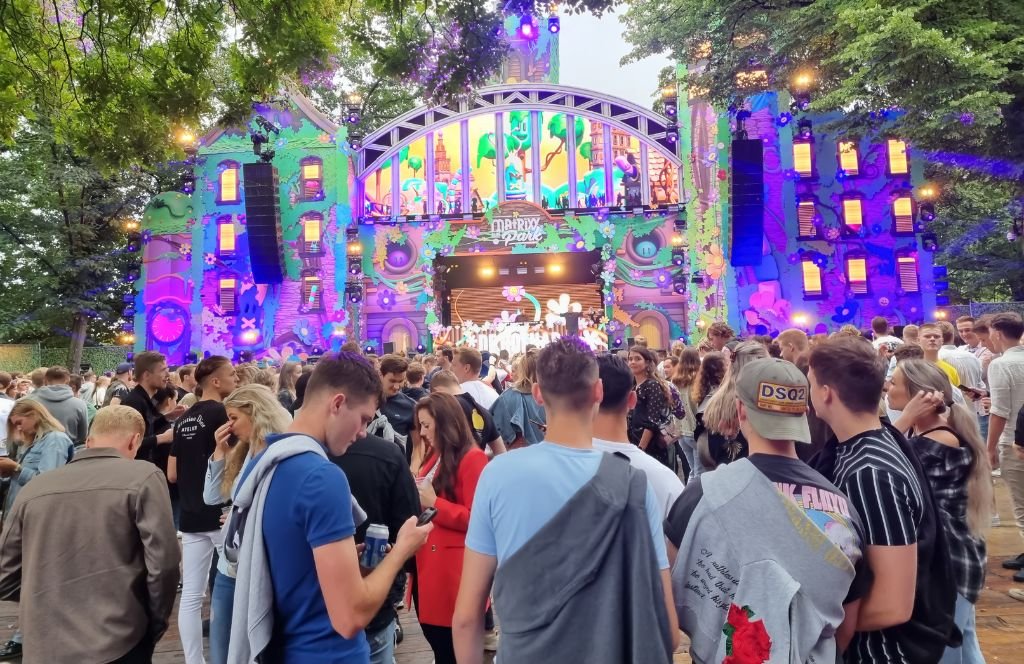
Waalkade and Matrixx Stages: Waalkade hosts large-scale performances with food truck areas around Labyrinth and under the Waal Bridge near the docks. Matrixx at the Park in Hunnerpark is known for major dance and pop acts, often serving as the main stage for high-energy performances.
Valkhof and Alternative Programming: The Valkhof park was added as a resting point in the bustle with an alternative program, intended as an oasis of calm. It became an overnight success and remains known for its unique atmosphere and alternative music.
St. Stevenskerk Concerts: The Kunst in de Kerk project and intimate concerts in St. Stevenskerk offer an oasis of calm in the midst of the busy festival, featuring classical music, theatre and art installations by young Dutch artists.
Street Theatre and Workshops: Beyond music, the program includes circus workshops, djembé workshops for kids, drum caravans, nonstop circus workshops by De Circusfabriek, Beach-Up Comedy and unique walks through beautiful and varied environments.
Event Experience
City-Wide Wandering: The core experience is wandering through lively squares, discovering incredible live music stages, enjoying colorful lights, street performers, food stands and thousands of visitors celebrating together. A 4K walking tour captures the authentic vibe of streets filled with music and lights.
Grand Opening: The festival opens with a unique ceremony where cabaret artist Pieter Derks addresses the city on 17 stages simultaneously. At 4:00 PM sharp, glasses are raised, a countdown takes place and the Vierdaagsefeesten are officially opened. The first cup is free on the opening afternoon when you buy a drink.
Day and Night Program: Outdoor stages start between 2:00 PM and 3:00 PM or between 6:00 PM and 8:00 PM depending on location. Acts on outdoor stages end at 12:30 AM from the opening day until the day before closing, and at 1:00 AM on the final day. After the acts, terraces without music remain open until 2:00 AM. At night, indoor programming continues in clubs with regular opening hours.
Circular Cup System: Upon buying the first drink, visitors pay a one-time environmental contribution for the cup. At each subsequent order, only the consumption price is paid when returning the used cup. The same cups are used city-wide, recognizable by the Vierdaagsefeesten logo in the rim, and can be exchanged at any outdoor bar or terrace.
Family and Inclusive Programming: The festival includes a more extensive children’s program, free group walks, circus and djembé workshops and theatre on the Waalkade, ensuring families can enjoy the festivities during the day.
Fireworks Tradition: De Waal in Flames fireworks display, introduced in the early years, continues to be inextricably linked to the festival, attracting tens of thousands to the Waalkade for a music-synchronized show.
Date & Schedule
Event Dates: July 17–23, 2027
Duration: Seven days, known as the most beautiful seven days of the year
Festival Type: Largest freely accessible city festival coinciding with the International Four Days Marches
Daily Schedule:
Outdoor Stages: Start between 2:00 PM and 3:00 PM or between 6:00 PM and 8:00 PM depending on location
End of Outdoor Acts: 12:30 AM on Saturday through Thursday, 1:00 AM on Friday
Terraces Without Music: Open until 2:00 AM after acts end
Indoor Programming: Continues at night in clubs and hospitality venues with regular annual opening times
Wristband Exclusive Program: Daily from 2:00 PM to 9:00 PM at a different location in the city for wristband holders
Opening Ceremony: Saturday afternoon at 4:00 PM with simultaneous address on 17 stages, countdown and free first cup promotion
Four Days Marches Connection: Coinciding with the festival, the International 4Daagse walk takes place from Tuesday to Friday during the festival week
Visiting this event? Don’t miss out on these amazing activities and local experiences while you’re here.
Location & Venue
City: Nijmegen, Gelderland, Netherlands, the oldest city in the Netherlands
Festival Area: Entire city centre of Nijmegen, with 40 different stages spread across squares, parks, quays and streets
Key Locations:
Waalkade: Riverside quay with large food truck areas around Labyrinth and under the Waal Bridge near the docks, hosting major performances and De Waal in Flames fireworks
Matrixx at the Park: Hunnerpark stage known for major pop and dance acts
Valkhof Park: Alternative program and resting point with unique atmosphere
Grote Markt and Plein 1944: Central squares with diverse music programming and terraces
Koningsplein, Stationsplein and Voerweg: Additional squares with police points and stages
St. Stevenskerk: Church venue for intimate concerts, art and theatre offering calm oasis
Stadseiland Stek, Ramblas and Matrixx: Locations where wristband toilets and programs are valid
City Centre Streets: Burchtstraat, Kelfkensbos, Daalseweg and other streets filled with terraces and performances
Venue Access: All outdoor stages are freely accessible. No fences or entrance fees. The city centre is closed to car traffic during the festival, creating a pedestrian festival zone.
Event History
Vierdaagsefeesten traces its origins to 1969, when the 53rd Four Day Marches was overshadowed by Neil Armstrong’s historic moon landing. The steps of 15,000 walkers went virtually unnoticed as walkers wanted to be inside early to watch the TV broadcast, and there were no activities in Nijmegen city centre to keep them. On Friday afternoon of the finish, shops closed early and the city centre was as empty as on a Sunday afternoon.
It was Nico Grijpink who sounded the alarm immediately after. In April 1970, he wrote a passionate appeal to city centre entrepreneurs: We have to get Nijmegen out of the mire, otherwise the Four Day Marches will die out. A PR agency idea of sticking one guilder on the invitation with text This must be the first win was turned into quarters and presented at a historical meeting at the Centrum cinema. The meeting drew a big crowd and the festival was born.
In 1970, a budget of 25,000 guilders was collected for the first Summer Festival, with 5,000 guilders from the Event Committee and 20,000 guilders from 500 shop owners contributing 40 guilders each. To ensure extra music, Four Day Marches marching bands were bribed with 25 guilders to make an additional round of the city.
The festival grew rapidly. The fireworks display De Waal in Flames was introduced and continues today. By 1973, the format with a Saturday opening and Friday closing was found. In the 1980s, it grew into a strong colorful spectacle attracting up to 800,000 visitors, with Valkhof added as an alternative resting point. In the 1990s, surveys showed 800,000 visitors with high satisfaction ratings of 7.8 out of 10.
In 1998, the name Zomerfeesten was changed to Vierdaagsefeesten to strengthen the link with the Four Day Marches. By 2001, it attracted 1 million visitors, becoming the best attended event in the Netherlands for the fifth consecutive year. In 2008, it ranked first in the Top 100 Event Monitor. Today, it has grown into the largest event in the Netherlands with over one and a half million visits, shifting from volunteer organization to professional direction with steering groups of citizens, visitors and business owners.
Getting to the Event
By Train: Nijmegen Central Station is well served with direct trains from Amsterdam, Utrecht, Arnhem, Den Bosch and other major cities. During Vierdaagsefeesten, 325 additional trains are put on to transport visitors. The station is within walking distance of most stages, with Stationsplein serving as one of the festival squares.
By Bus: Regional and city buses serve the centre, though many central roads are closed during the festival. Park and Ride facilities are recommended.
By Car: The city centre is closed to car traffic during the festival. Mobility plans prevent traffic from driving onto Waalkade. Parking is available at Park and Ride locations on the outskirts, with shuttle buses and free transport options to the centre. Artists and crew for Matrixx, Waalpark and Valkhof may drive through under guidance in consultation with stage managers.
By Bike: Nijmegen is extremely bike-friendly. Cycling is one of the best ways to reach the festival, with extensive bike parking facilities around the centre. The organization actively stimulates and facilitates visitors to come by bike or public transport.
On Foot: Once in the city centre, everything is walkable. Most stages are within a short walk of each other, making it ideal to wander and explore.
Accessibility: The festival provides a map showing toilet locations, police points and stages. Five police points are set up across Nijmegen operated between 7:00 PM and 1:00 AM at Koningsplein, Voerweg, Waalkade, Stationsplein and other locations.
Where to Stay Nearby
City Centre Hotels: Nijmegen offers hotels within walking distance of festival squares, from boutique hotels in the historic centre to business hotels near the station. Early booking is essential as the city fills with over one and a half million visits during the week.
Holiday Rentals and Apartments: Apartments and holiday rentals are popular for groups staying for multiple days, offering kitchen facilities and more space.
Camping and Holiday Parks: Campsites are available in the surrounding areas of Nijmegen, Heumen and Groesbeek, including the military camp Heumensoord built for the marches. Many walkers camp there, while festival visitors use nearby campsites.
Nearby Cities: Visitors also stay in Arnhem, Den Bosch and Kleve in Germany, all within 30 to 45 minutes by train or car.
No Official Festival Campsite: Vierdaagsefeesten does not operate its own campsite. Accommodation is city-based and integrated into Nijmegen’s existing hotel and camping infrastructure. Booking well in advance is highly recommended.
Things to Do Before or After the Event
Explore Nijmegen’s History: As the oldest city in the Netherlands, Nijmegen offers Roman history, the Valkhof Museum, Stevenskerk and historic streets like Burchtstraat and Kelfkensbos where merchandise stands are located during the festival.
Waal River and Floodplains: Walk along the Waalkade, enjoy views of the Waal River and Waal Bridge, and explore the floodplains and nature areas around Stadseiland.
De Waal in Flames: The traditional fireworks and music display on Waalkade is a must-see highlight that attracts tens of thousands, combining music with pyrotechnics over the river.
Parks and Nature: Kronenburgerpark, Valkhof Park and Hunnerpark offer green spaces for relaxation between performances.
Culinary Exploration: Beyond festival food trucks, Nijmegen’s restaurants offer diverse cuisines, with special attention to CO2 impact on menus via the Klimato tool that shows environmental impact of dishes.
Art and Culture: Visit museums, galleries and the St. Stevenskerk art exhibitions that are part of the festival program, providing a calmer cultural experience amid the bustling city.
Restaurants & Dining Nearby
Festival Food Trucks: Large food truck areas are located at Waalkade around Labyrinth and under the Waal Bridge near the docks, offering diverse street food, international cuisines and local specialties.
City Centre Terraces: More than 250 cafes and restaurants jointly put out 20,000 terrace chairs during the festival, creating a city-wide terrace festival. Options range from Dutch bistros to Italian, Asian, Middle Eastern and vegan restaurants.
Grote Markt and Plein 1944: These squares are culinary hubs with terraces, craft beer bars, cocktail bars and restaurants serving international cuisine, popular with festival attendees.
Sustainable Dining: The festival maps CO2 impact on plates using the Klimato tool, helping visitors make sustainable choices. Many vendors focus on locally sourced, organic and vegetarian options.
No Central Food Court: Rather than a single food court, Vierdaagsefeesten integrates dining into the city, with each square offering its own food and drink selection as part of the hospitality experience.
Ticket Information
Vierdaagsefeesten is primarily a freely accessible event with no entrance fee for most performances.
General Admission: $0.00 USD. Access to over 1,000 performances across 40 stages is free, with the exception of intimate concerts in Stevenskerk and a few performances at Festival ‘t Eiland.
Vierdaagsefeesten Wristband: $13.50 USD. Original price €12.50. Valid for seven days with unlimited access to all toilets at all stages, including Matrixx at the Park, Stadseiland Stek, Ramblas and additional toilets between stages such as opposite Central Station. Also includes daily access to an exclusive extra program from 2:00 PM to 9:00 PM at a different location in the city each day.
Cup Environmental Contribution: $1.10 USD. Original price €1.00 as a one-time environmental contribution for the reusable cup upon buying the first drink. Each subsequent order only charges consumption price when returning the used cup. Cups are usable city-wide and can be taken home and reused the next day. Cups are not redeemable for cash but can be recycled into new cups when returned.
Stevenskerk and Special Venues: Ticketed intimate concerts require separate tickets, typically ranging from $5.00 to $27.00 USD based on previous editions.
Shop: Wristbands can be ordered now in the Vierdaagsefeesten webshop. Physical program booklets are available at hospitality venues and at the merchandise stand at the end of Burchtstraat towards Kelfkensbos.
Tips Before You Go
Get the Wristband: Even though the festival is free, buying the Vierdaagsefeesten wristband for unlimited toilet access and daily exclusive programs from 2:00 PM to 9:00 PM significantly improves comfort during seven days of festivities and speeds up toilet queues.
Use the App and Light Newspapers: Download the Vierdaagsefeesten app to receive push notifications in case of calamities or large crowds and stay updated with current information. Light newspapers spread through the centre also show important announcements.
Follow the Cup System: Bring back your cup to any bar to reduce waste. Cups can be exchanged even if folded or torn, as long as they are not covered in sand or dirt. Returning cups ensures they can be recycled into new cups.
Plan for Crowds: With over one and a half million visits, some squares reach near full capacity. To spread crowds, popular artists are spread over 28 different stages. Arrive early for popular acts and consider alternative stages for a more relaxed experience.
Travel Sustainably: Energy is almost entirely locally generated green power. Come by bike or public transport, use circular facilities and check the Klimato tool to see CO2 impact of your food choices, supporting the festival’s green heart approach.
Official Event Information
Official Website: https://www.vierdaagsefeesten.nl/
Contact Email: info@vierdaagsefeesten.nl
Phone: +31 24 323 3163
Festival Location: Entire city centre of Nijmegen, with main office at Van Schaeck Mathonsingel 12, 6512 AR Nijmegen, Netherlands
Main Stages: Waalkade, Matrixx at the Park, Valkhof, Grote Markt, Plein 1944, Koningsplein, Stationsplein and 33 additional locations
For official program, stage map, wristband shop, sustainability initiatives, residents information booklet and latest news, visit the official website and follow updates via Instagram, Facebook, TikTok and newsletter.
Attendee Experiences
Attendees consistently describe Vierdaagsefeesten as having the best atmosphere among all major events in the Netherlands. Visitors most frequently cite the atmosphere, diverse activities, the fact that it lasts a week and is free, the people and the reunion feeling as reasons for returning year after year.
First-time visitors are often overwhelmed by the scale and variety. Wandering through lively squares, discovering incredible live music stages, enjoying colorful lights, street performers, food stands and thousands of visitors celebrating together creates an immersive experience. A 4K walking tour video captures the authentic vibe of streets filled with music and lights exactly as it feels during the festivities.
Regular visitors highlight the unique combination of the walking event and the city festival. With 60 to 70 percent of walkers attending the festivities, usually on Sunday, Monday and Friday, the interaction between international walkers from over 50 nations and party crowds adds an international, celebratory feel.
Families appreciate the extensive children’s program, free group walks, circus workshops and daytime activities that make the festival accessible during afternoon hours. The availability of additional trains, free access and diverse music ensures all age groups are represented, from young children to elderly residents.
Tickets Sell Out
in Minutes
Maps
Contact
Video
FAQ's
Is Vierdaagsefeesten free and what does the wristband include?
Most performances across the 40 stages are completely free to access, making it the largest freely accessible event in the Netherlands, with only intimate concerts in Stevenskerk and a few special venues requiring separate tickets. The optional wristband provides seven days of unlimited access to all toilets at all stages and locations between stages, plus daily access to an exclusive extra program from early afternoon until evening at a different city location each day.
How does the cup system work and why is it used?
When you buy your first drink you pay a one-time environmental contribution for the reusable cup, and for each subsequent order you only pay the consumption price when you return your used cup. The same cups are used city-wide and can be exchanged at any outdoor bar or terrace, even if folded or torn, as long as they are not dirty. This circular cup system, combined with green energy, circular toilets and waste separation, is part of the festival's sustainability efforts to reduce waste and promote recycling.
Where do the festival activities take place in Nijmegen?
The festival takes place across the entire city centre of Nijmegen with stages spread over 40 different locations including Waalkade, Matrixx at the Park in Hunnerpark, Valkhof Park, Grote Markt, Plein 1944, Koningsplein, Stationsplein, Stadseiland Stek and many streets and squares. All outdoor stages are freely accessible without fences, and the city centre is closed to car traffic, creating a walkable festival zone where you can wander from one stage to another within minutes.
What is the connection between Vierdaagsefeesten and the Four Days Marches?
Vierdaagsefeesten was created in 1970 to keep walkers and spectators in the city after the Four Days Marches were overshadowed by the moon landing, ensuring the walking event would remain in Nijmegen. The walking route on the second day was adjusted to go through the city centre, and free shuttle buses were arranged to bring military walkers from Heumensoord camp to the city. Today the two events coincide, with the marches taking place from Tuesday to Friday during the festival week, creating a unique combination of athletic and cultural celebration.
How can I stay informed and safe during the crowded festival?
Download the official Vierdaagsefeesten app to receive push notifications in case of calamities or large crowds and to stay updated with current information. You can also follow news and updates via Instagram, Facebook, TikTok and the newsletter, plus check light newspapers spread through the centre that display important announcements. Physical program booklets are available at hospitality venues and at the merchandise stand, and five police points are set up across the city operated in the evenings for safety and information.